
Electronic Blackmail Awareness Guide or Cyber Extortion
This guide explains what electronic blackmail is, how it happens, and why it is extremely dangerous. It highlights the psychological tactics used by blackmailers, the long-term impact on victims, and the most common mistakes to avoid. It also provides practical steps for immediate protection, reporting, and digital prevention, along with guidance on psychological, legal, and technical support.
What You’ll Learn
Understand what electronic blackmail is and how it typically happens
Learn the common tactics used to pressure and manipulate victims
Discover the psychological and emotional impact of online blackmail
Avoid the most common mistakes that can make the situation worse
Follow step-by-step actions for immediate protection and response
Learn how to report incidents and secure your accounts
Get practical tips to strengthen your digital privacy and prevent future risks
Stay informed and prepared. Download the full guide to learn how to protect yourself, respond safely, and take control of your digital security.
Signs of Blackmail and How to Support Victims
An awareness resource highlighting the psychological, behavioral, and physical signs that may indicate someone is a victim of blackmail, such as fear, anxiety, and a decline in daily performance. It also outlines practical steps to respond, including offering empathy and support, seeking professional help, respecting the victim’s decisions, and promoting awareness to prevent further harm.
The Economic Impact of Cyber Blackmail
An awareness resource explaining how cyber blackmail affects individuals, businesses, and national economies. It highlights consequences such as direct financial losses, psychological and productivity impacts, reputational damage for organizations, increased security and government spending, reduced investment, declining trust in digital transactions, and negative effects on employment and the digital economy.
Social Engineering: The Hidden Tool of Cyber Blackmailers
An educational overview of social engineering and how attackers manipulate human behavior to obtain sensitive information. It covers common tactics such as phishing, voice scams, emotional manipulation, and spam, explaining how these methods are used to collect data and enable cyber blackmail.
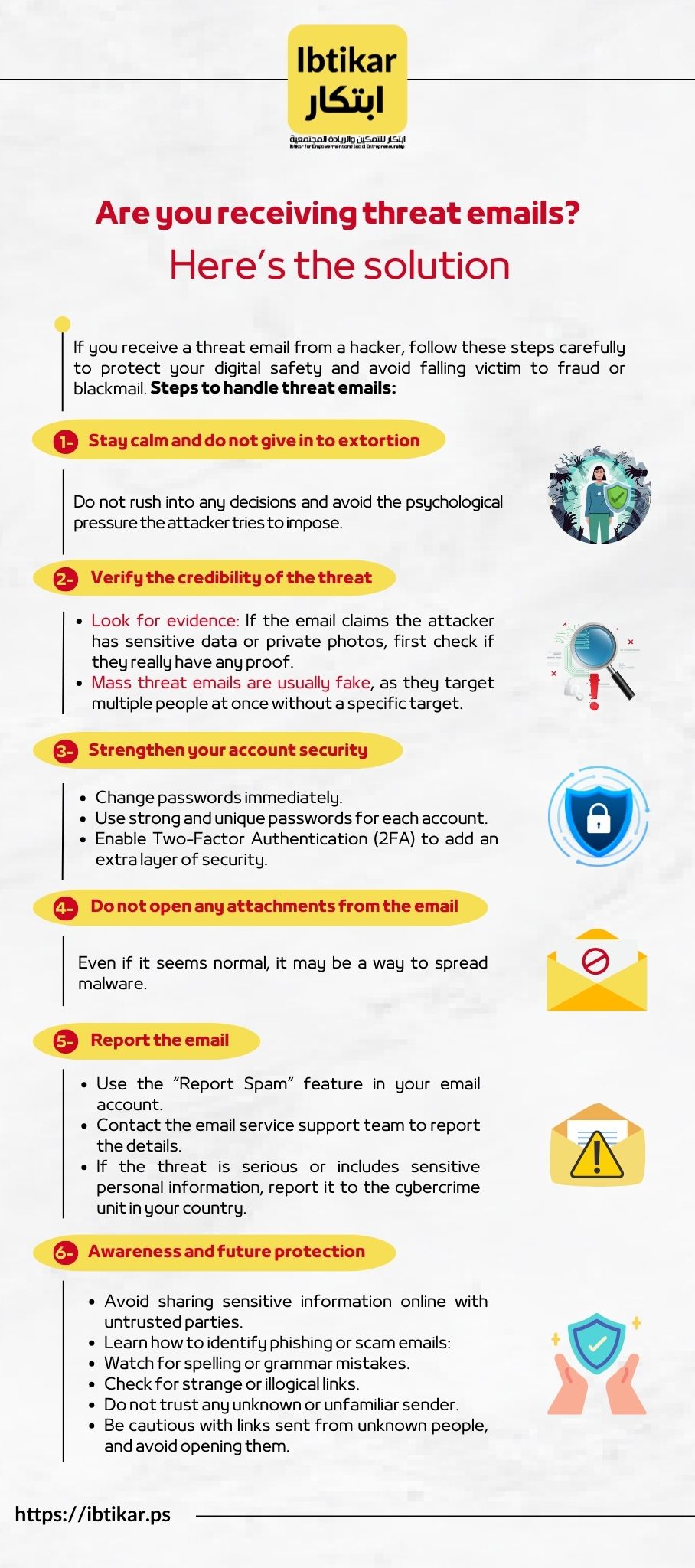
How to Handle a Blackmailer and Stop the Threat
A practical resource outlining effective steps to respond to blackmail, such as staying calm, stopping communication, securing digital accounts, and reporting the incident to authorities. It also explains that complying with a blackmailer often increases the risk and that legal action is the safest way to end the situation.
Common Methods of Cyber Blackmail
An awareness guide explaining the techniques used by cyber blackmailers, including fake social media accounts, suspicious links, and deceptive emails that imitate official messages. It highlights how attackers build trust, exploit victims, and use urgent requests, harmful attachments, or fraudulent addresses to carry out blackmail
Fake Job Offers: A Common Cyber Blackmail Trap
An awareness resource highlighting the psychological, behavioral, and physical signs that may indicate someone is a victim of blackmail, such as fear, anxiety, and a decline in daily performance. It also outlines practical steps to respond, including offering empathy and support, seeking professional help, respecting the victim’s decisions, and promoting awareness to prevent further harm.
Blackmail through Fraud, Deception, and Psychological Manipulation
An educational overview of how scammers exploit fear, emotional vulnerability, and false claims of special abilities to pressure victims. It explains common tactics such as financial extortion, emotional manipulation, false promises, and the psychological harm caused by these practices.
Protecting Children and Teens from Cyber Blackmail
An awareness resource highlighting the role of parents in protecting young users online through education, balanced monitoring, trust-building, and digital safety practices such as strong passwords, two-factor authentication, and safe online behavior.
If You’re Blackmailed with Personal Content: What to Do
A practical guide outlining the key steps to take when facing blackmail involving photos or videos. It emphasizes staying calm, cutting off communication, preserving evidence, reporting the incident to authorities and platforms, and seeking legal or psychological support when needed.
The Difference Between Cyber Blackmail and Traditional Blackmail
An informative guide comparing cyber blackmail and traditional (non-electronic) blackmail. It explains how cyber blackmail occurs through digital platforms without geographic limits and allows offenders to hide their identity, while traditional blackmail typically happens face-to-face, is location-bound, and is generally less widespread.
The Difference Between Financial Blackmail and Bribery
An educational comparison explaining how financial blackmail relies on threats and pressure to force compliance, while bribery involves voluntary exchange for personal gain, and when a situation shifts from bribery into coercive blackmail.
Cyber Blackmail Victims: How to Support and Protect Them
A practical resource explaining who may be affected by cyber blackmail and how to respond effectively through emotional support, careful listening, evidence collection, reporting to authorities, and strengthening digital security practices.
Combating Online Threats and Cyber Extortion
An informational guide on how cyber threats and extortion occur, legal consequences under Palestinian law, and essential prevention measures such as strong passwords, multi-factor authentication, regular updates, and data backups.
Domestic and Emotional Blackmail and Its Impact on Families
An awareness overview of emotional, legal, and reputational pressure used within relationships, including threats, manipulation, defamation, and the misuse of children or legal claims, and how such practices can contribute to family and social instability.
The Role of Families in Addressing Cyber Blackmail
An educational guide highlighting how families can prevent and respond to cyber blackmail by raising awareness, providing emotional support, building trust, protecting privacy, and taking appropriate technical and legal actions when incidents occur.
Cyber Blackmail through Fake Job Offers: Warning Signs and Protection
A guide outlining the characteristics of fraudulent job offers used for blackmail or financial scams, such as requests for sensitive information, unrealistic salaries, or unjustified fees, along with practical steps to verify and report suspicious opportunities.
Fear and Anxiety: The Psychological Impact of Cyber Blackmail
An awareness resource explaining the emotional effects of cyber blackmail, including fear, insecurity, depression, loss of self-confidence, and difficulty coping with daily life. It also provides guidance on recovery through support, positive thinking, and healthy activities.
Can a Cyber Blackmailer Be Acquitted? Legal Insights and Conditions
An awareness guide explaining the legal difference between threats and blackmail, the key elements required to prove a cyber blackmail case, and the factors that may allow offenders to escape punishment, such as lack of evidence, weak legislation, or limited international cooperation.
Types of Hackers and Their Role in Cyber Blackmail
An educational overview explaining the different types of hackers, including ethical, malicious, and grey-hat hackers. It also highlights the difference between real and fake hackers and the common techniques used in cyber blackmail, such as phishing, malware, fake Wi-Fi networks, and social engineering.