Ibtikar has developed an artisanal ecosystem that brings together women’s livelihoods and the preservation of Palestinian heritage as a living practice. What began with a small group of women artisans has grown into a wider network of producers from villages, refugee camps, and marginalised communities across the Bethlehem and Hebron governorates. For many participants, artisanal work represents an important source of income and a means of supporting their households during periods of economic uncertainty.
Ibtikar approaches handicraft production as an integrated economic activity rather than a temporary project or a channel for selling individual products. The work therefore focuses on helping women produce consistently, improve quality, develop market-ready collections, collaborate across different skills, and strengthen access to local and international markets.
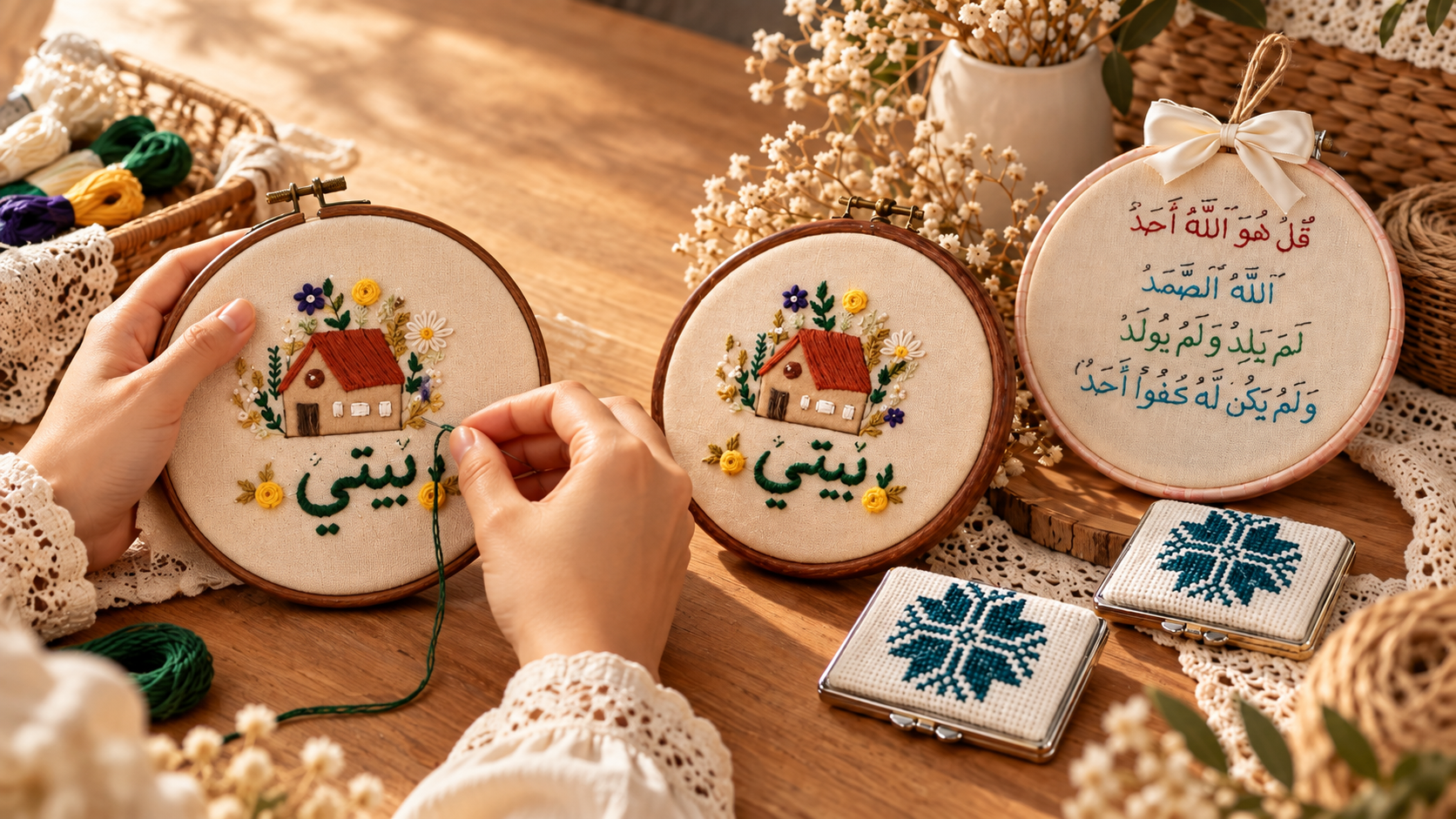
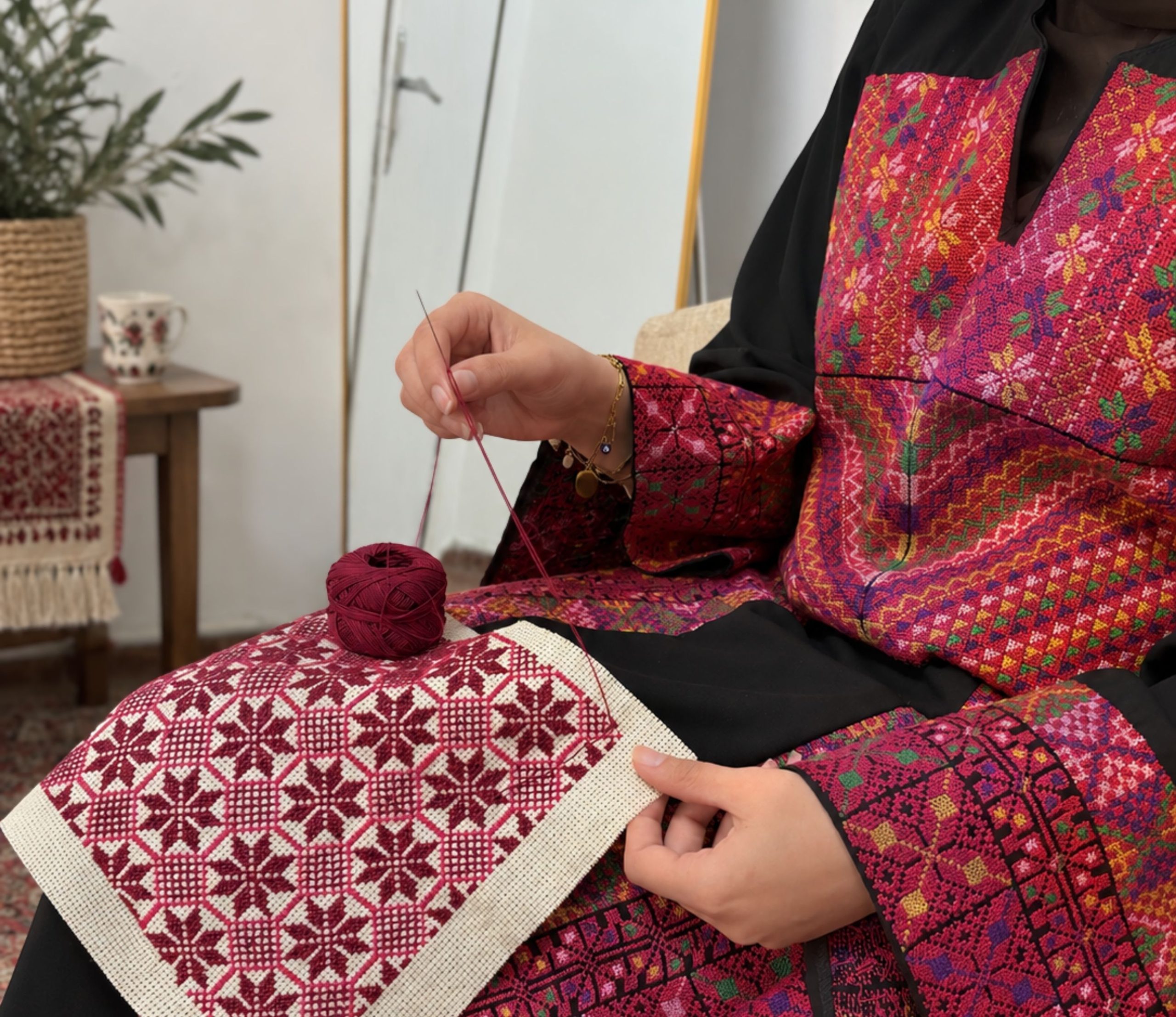
The artisan network includes women working across a range of crafts, including Palestinian embroidery, embroidered purses and bags, accessories, glass jewellery, leather products, crochet, and Palestinian heritage puppets. Collaboration among different artisan groups allows multiple skills to be combined within the same product and creates production opportunities that individual producers may not be able to fulfil alone.
Ibtikar also places financial security at the centre of the model. The organisation maintains a reserve that allows artisans to be paid directly and in full when their work is completed, without transferring the risk of delayed buyer payments or international transfers to the producers themselves. This approach helps protect household cash flow and places the dignity and stability of women artisans at the heart of the business model.
To support long-term sustainability, Ibtikar continues to strengthen the infrastructure behind the artisan network through product catalogues, payment systems, point-of-sale and barcode tools, coordinated quality control, logistics, and direct digital marketing. These systems provide a stronger foundation for production planning, market access, and the continued development of the network as a social enterprise.
The ecosystem provides more than orders and sales opportunities. It also creates a space where artisans can exchange knowledge, address production challenges, learn from one another, and remain connected to a wider professional and social community. These relationships contribute to economic resilience by helping women adapt, collaborate, and build more sustainable opportunities over time.
The Palestinian Puppets are one example of how heritage and livelihoods come together within this work. Each puppet carries the dress and visual memory of a particular Palestinian city or village, while also reflecting the skill and experience of the woman who made it. A permanent exhibition space at Ibtikar, located on the Palestine Heritage Trail, presents the growing puppet collection alongside other heritage products, connecting visitors with the makers and turning cultural engagement into direct economic support for women artisans.
Through this ecosystem, every product represents more than a handcrafted item. It can mean income reaching a household, a skill remaining in active use, a woman strengthening her economic agency, and Palestinian heritage continuing as a living and evolving practice.
Ibtikar approaches handicraft production as an integrated economic activity rather than a temporary project or a channel for selling individual products. The work therefore focuses on helping women produce consistently, improve quality, develop market-ready collections, collaborate across different skills, and strengthen access to local and international markets.
The artisan network includes women working across a range of crafts, including Palestinian embroidery, embroidered purses and bags, accessories, glass jewellery, leather products, crochet, and Palestinian heritage puppets. Collaboration among different artisan groups allows multiple skills to be combined within the same product and creates production opportunities that individual producers may not be able to fulfil alone.
Ibtikar also places financial security at the centre of the model. The organisation maintains a reserve that allows artisans to be paid directly and in full when their work is completed, without transferring the risk of delayed buyer payments or international transfers to the producers themselves. This approach helps protect household cash flow and places the dignity and stability of women artisans at the heart of the business model.
To support long-term sustainability, Ibtikar continues to strengthen the infrastructure behind the artisan network through product catalogues, payment systems, point-of-sale and barcode tools, coordinated quality control, logistics, and direct digital marketing. These systems provide a stronger foundation for production planning, market access, and the continued development of the network as a social enterprise.
The ecosystem provides more than orders and sales opportunities. It also creates a space where artisans can exchange knowledge, address production challenges, learn from one another, and remain connected to a wider professional and social community. These relationships contribute to economic resilience by helping women adapt, collaborate, and build more sustainable opportunities over time.
The Palestinian Puppets are one example of how heritage and livelihoods come together within this work. Each puppet carries the dress and visual memory of a particular Palestinian city or village, while also reflecting the skill and experience of the woman who made it. A permanent exhibition space at Ibtikar, located on the Palestine Heritage Trail, presents the growing puppet collection alongside other heritage products, connecting visitors with the makers and turning cultural engagement into direct economic support for women artisans.
Through this ecosystem, every product represents more than a handcrafted item. It can mean income reaching a household, a skill remaining in active use, a woman strengthening her economic agency, and Palestinian heritage continuing as a living and evolving practice.
Posted in
Empowerment and Social Innovation